
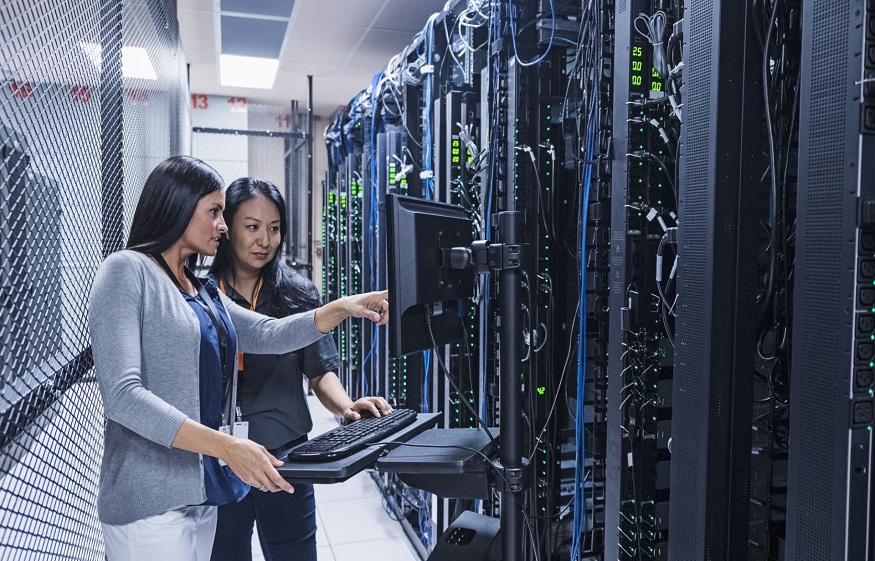
Artificial intelligence is often discussed through the lens of algorithms, chatbots, and increasingly capable models. Behind every AI breakthrough sits a less visible requirement: enormous computing infrastructure. Training and operating advanced AI systems requires powerful processors, high-speed networking, reliable electricity, cooling systems, and facilities capable of running demanding workloads continuously. This is where data centres have become an increasingly important part of the global AI race.
Singapore occupies an interesting position in this rapidly changing landscape. Despite its relatively small geographic size, the country has developed into a major digital and connectivity hub for Asia. Its data centre industry sits at the intersection of cloud computing, international telecommunications, enterprise technology, and the growing demand for AI infrastructure. Understanding Singapore’s role therefore provides a useful perspective on how the global AI ecosystem is developing beyond the companies that directly build AI models.
Why Data Centres Matter to Artificial Intelligence
Modern AI systems require substantially more computing capacity than many traditional software applications. Large language models, computer vision systems, recommendation engines, scientific simulations, and other AI workloads rely heavily on accelerated computing. Graphics processing units and other specialised processors can perform enormous numbers of calculations, but they also generate considerable heat and require substantial amounts of electricity. Data centres provide the controlled environments needed to operate these systems reliably.
This infrastructure is becoming especially important as businesses move from experimenting with AI to integrating it into everyday operations. Financial institutions, manufacturers, healthcare organisations, retailers, and technology companies increasingly use AI for analysis, automation, forecasting, customer service, and research. The broader adoption of these applications creates demand not only for computing hardware but also for facilities, networking capacity, storage, cooling, and dependable power. Industry experts generally view infrastructure availability as one of the practical constraints that can influence how quickly AI adoption expands.
Singapore’s importance comes partly from its role as a regional digital crossroads. Its established telecommunications infrastructure and proximity to major Asian markets make it attractive for companies seeking reliable connectivity and access to customers across the region. Data centres can therefore serve more than one purpose: they support domestic digital activity while also functioning as part of broader regional computing and cloud infrastructure.
Singapore’s Strategic Position in Asia
Singapore has spent decades building an economy around international trade, finance, logistics, and technology. That foundation has also supported the development of a sophisticated digital ecosystem. Global cloud providers, telecommunications companies, technology firms, and enterprises have established operations in the country, creating an environment where data infrastructure can support a wide range of workloads.
Singapore faces a practical challenge that differentiates it from countries with far more available land and natural resources. Data centres consume significant amounts of electricity and require substantial physical space and cooling capacity. As demand for AI infrastructure increases, policymakers and industry participants must balance digital growth with constraints involving energy efficiency, sustainability, land availability, and grid capacity. This has encouraged greater attention toward efficient facility design, renewable energy procurement, advanced cooling technologies, and responsible infrastructure planning.
Read More: What Is Yext SEO and How It Improves Local Search Visibility
The issue is not unique to Singapore. Around the world, governments and technology companies are confronting similar questions about how to expand computing capacity without creating unsustainable demands on energy and other resources. Singapore’s experience is therefore relevant to the wider AI industry because it demonstrates how a densely developed economy must approach infrastructure expansion carefully rather than simply adding facilities without considering their broader impact.
The Connection Between AI Infrastructure and Technology Markets
The expansion of AI infrastructure also creates a wider ecosystem of companies involved in computing hardware, servers, networking equipment, cooling, power management, construction, and data centre operations. This means investors and technology observers often look beyond the companies developing AI software when considering the industry’s economic impact.
For example, companies supplying servers and high-performance computing equipment can become part of the infrastructure chain supporting AI deployment. Market participants researching this ecosystem may encounter discussions surrounding SMCI stock, particularly when examining how specialised server manufacturers fit into the expanding demand for accelerated computing and data centre infrastructure. However, a company’s participation in an expanding industry does not automatically determine its financial performance. Investors still need to consider factors such as valuation, competition, supply chains, customer concentration, capital requirements, profitability, and broader market conditions.
This distinction is important because the AI economy is much larger than any single company. A data centre expansion can benefit multiple layers of the technology supply chain, from semiconductor manufacturers and server designers to networking providers and energy infrastructure companies. At the same time, increased competition can place pressure on margins, while rapid technological change can make existing equipment less attractive as newer architectures emerge.
Conclusion
Singapore’s data centre industry offers a valuable window into the infrastructure supporting the global AI transformation. The country combines strong connectivity, an established technology ecosystem, and access to major Asian markets, while simultaneously facing the energy, land, and sustainability challenges associated with intensive computing.
Read More: Responsibilities Of An F&I Manager In A Car Dealership
As AI becomes more deeply embedded across industries, data centres will remain a foundational part of the technology landscape. Singapore’s experience shows that the global AI race is not simply about who develops the most sophisticated model. It is also about who can build, power, connect, and operate the infrastructure required to make those systems useful at scale.